Regulatory Shifts Prompt Major Changes for Sweepstakes Casinos in California and Indiana

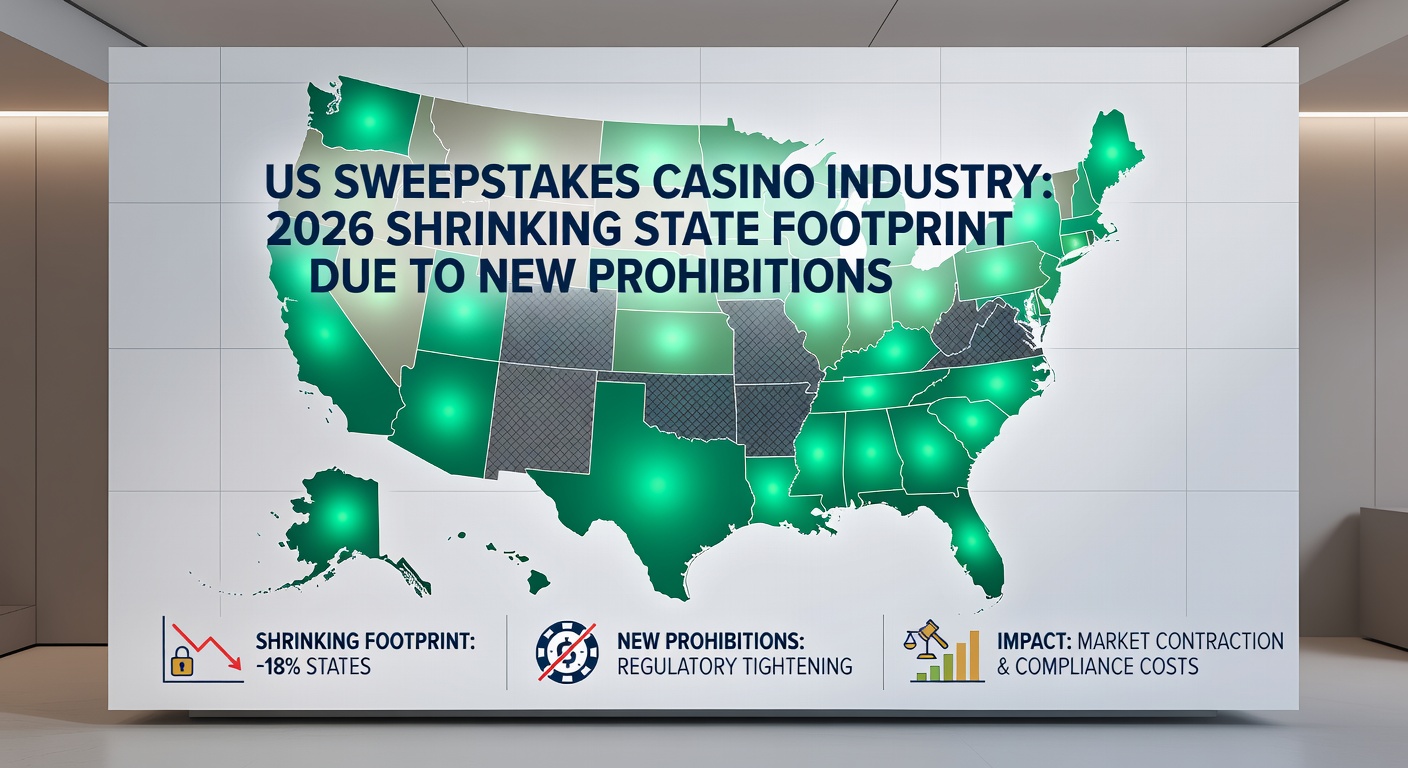
California’s Assembly Bill 831 took effect on January 1 2026 and introduced new prohibitions that reduced the number of states where sweepstakes casinos could operate legally while Indiana followed with House Bill 1052 signed in March 2026 and scheduled for enforcement on July 1 of the same year. These measures built on earlier closures that occurred in New York Maine and additional jurisdictions throughout 2025 and together they narrowed the available market for operators relying on sweepstakes mechanics.
Virtual Gaming Worlds the parent company behind Chumba Casino and several other platforms responded by exiting restricted states altogether and introducing new brands that avoid dual-coin systems. The company also revised redemption processes strengthened responsible-play messaging and redirected marketing efforts toward compliant payment channels amid ongoing regulatory scrutiny and litigation.
California Assembly Bill 831 Takes Effect
Assembly Bill 831 established clear restrictions on sweepstakes-style offerings that previously allowed users to purchase virtual currency while receiving free entries for chance-based games. Once the law became active on the first day of 2026 multiple platforms removed services from California residents and adjusted their terms to prevent further access. State records show that operators had already begun compliance preparations in late 2025 with many shifting focus to states that still permitted the model.
Data from legislative tracking indicates the bill targeted specific promotional structures that combined paid and free elements and enforcement relied on existing consumer protection statutes. Those who monitored the rollout observed that platforms without dual-coin features faced fewer immediate hurdles while legacy brands required substantial updates to their user interfaces and financial systems.
Indiana House Bill 1052 Sets July Enforcement Date
House Bill 1052 received approval in March 2026 and set a July 1 enforcement deadline that gave operators roughly four months to prepare for the new rules. The legislation mirrored elements of the California measure by prohibiting certain sweepstakes promotions that had operated under gray-area interpretations for several years. Companies active in Indiana began notifying users and modifying payment flows well before the cutoff date.
By May 2026 industry observers noted that most major platforms had already suspended new account registrations in the state while continuing to serve existing users under adjusted terms. The staggered timeline allowed firms to test alternative business models in neighboring jurisdictions where regulations remained unchanged.
Operator Strategies Shift Toward New Brands and Compliance Tools
Virtual Gaming Worlds led several visible adjustments including the launch of brands that operate without the dual-coin purchase-and-free-entry combination that had defined earlier sweepstakes products. The company also updated redemption thresholds and placed additional emphasis on responsible-play disclosures across its platforms. These steps aligned with broader efforts to reduce exposure to litigation while maintaining user engagement in permitted markets.
Payment strategy changes included greater reliance on methods that do not trigger sweepstakes classification under the new statutes. Marketing teams redirected budgets toward states with stable regulatory environments and away from jurisdictions that had enacted or were considering prohibitions. Similar patterns appeared among smaller operators that followed the lead of larger entities in restructuring their offerings.
Earlier Closures Set the Stage for 2026 Developments
Multiple states including New York and Maine had already implemented restrictions during 2025 that removed sweepstakes options from their markets. Those actions created a template that California and Indiana later adopted with their own legislative language. Operators who tracked these earlier moves reported reallocating resources and updating compliance frameworks in anticipation of further state-level action.
According to California legislative records the cumulative effect of these prohibitions produced a measurable contraction in the number of states where sweepstakes casinos maintained full operations. Industry reports from the same period documented corresponding increases in development activity for single-coin and social-casino alternatives.
Payment and Marketing Adaptations Continue
Platforms revised their financial processing to emphasize methods less likely to conflict with updated definitions of promotional gaming. Marketing language shifted toward educational content about responsible play and away from promotional offers that could be interpreted as encouraging paid participation. These modifications occurred alongside ongoing court cases that tested the boundaries of existing consumer protection rules in remaining operational states.
Research conducted by the National Center for Responsible Gaming highlighted how operators incorporated clearer disclosures into user onboarding flows following the 2026 changes. The adjustments reflected coordinated responses across multiple companies rather than isolated decisions by individual firms.
Conclusion
The combined impact of Assembly Bill 831 in California and House Bill 1052 in Indiana together with prior state actions created a smaller footprint for sweepstakes casino operations entering 2026. Major operators responded through brand diversification compliance updates and strategic shifts in marketing and payments that addressed the new regulatory environment. As enforcement dates passed and litigation continued the sector demonstrated ongoing adaptation while remaining active in jurisdictions that had not adopted similar prohibitions.