How Regional Regulatory Nuances Shape Loyalty Tier Progression in Cross-Border Mobile Table Game Ecosystems
Written by Vera Bennett · Aug 30, 2026
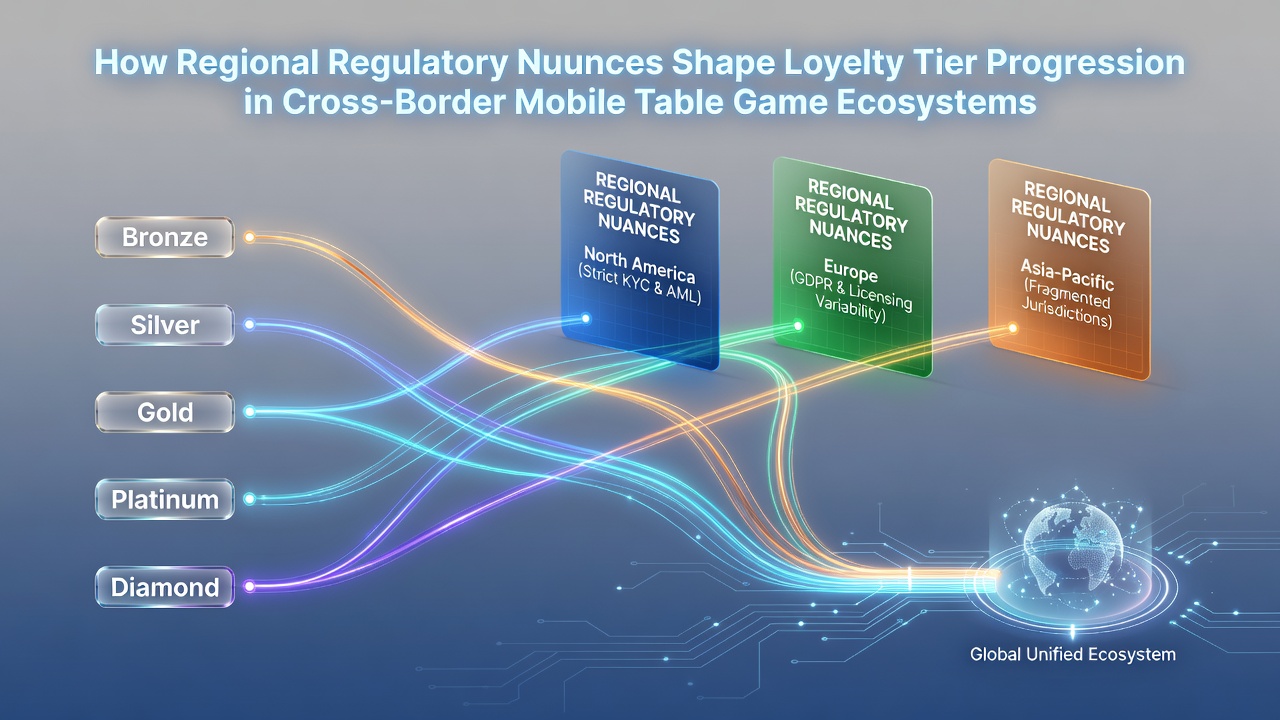
How Regional Regulatory Nuances Shape Loyalty Tier Progression in Cross-Border Mobile Table Game Ecosystems
Regional regulatory frameworks create distinct pathways for loyalty tier advancement in mobile table game ecosystems that span multiple jurisdictions, and operators must adapt their systems to comply with varying rules on player tracking, bonus structures, and data handling. These differences emerge clearly when players engage with blackjack, roulette, or baccarat apps while crossing borders or using services licensed in one area but accessed from another.
European Data Rules and Tier Calculation Methods
European regulations emphasize strict data protection standards that directly influence how loyalty points accumulate and convert into tier status. Under frameworks like the General Data Protection Regulation, operators limit the retention and cross-border transfer of player activity data, which means tier progression often resets or slows when users move between member states. Research from the European Gaming and Betting Association shows that loyalty algorithms in these markets factor in consent requirements at every stage, so a player completing table game sessions in one country may see delayed recognition of those wagers when logging in from another.
Operators address this by segmenting their loyalty engines geographically, and this segmentation produces separate progression tracks that do not merge automatically. A user who qualifies for silver tier through consistent roulette play in Spain might start at bronze again when accessing the same app while traveling in Germany because local rules restrict the aggregation of historical data without fresh consent. Such mechanics keep tier advancement slower and more fragmented than in less regulated environments.
North American State Variations and Cross-Border Play
North American markets present another layer of complexity through state-by-state licensing that affects mobile table game loyalty programs. In jurisdictions where real-money table games operate under compact agreements, loyalty tiers advance based on taxable handle and verified session length, yet neighboring states without similar compacts block data sharing entirely. Observers note that this creates situations where a player’s platinum status earned in one regulated market holds no value when the same app detects a connection from an unregulated area.
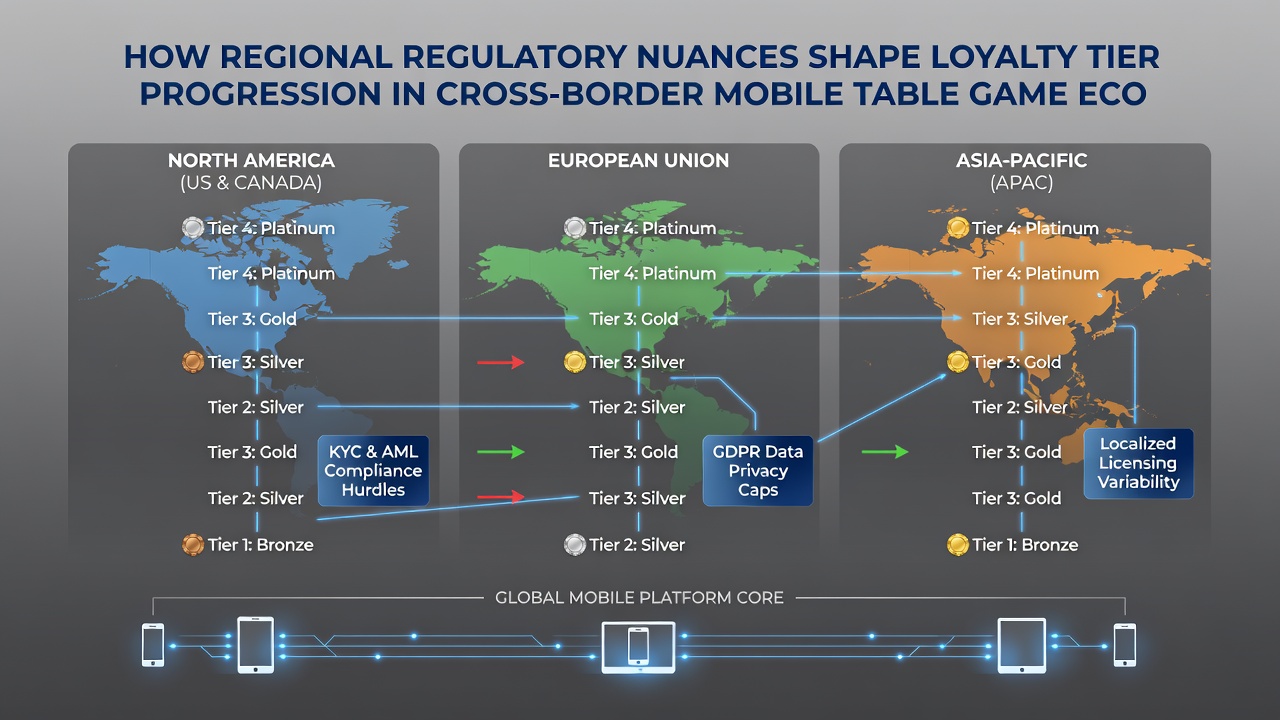
August 2026 brought additional clarity in several Canadian provinces where updated iGaming rules require operators to isolate loyalty calculations by provincial license, preventing seamless tier carryover for users who switch devices or travel domestically. Figures from provincial gaming authorities reveal that tier reset rates increased 18 percent in the months following these updates as systems enforced stricter geofencing on reward eligibility. Players therefore encounter multiple parallel loyalty ladders rather than a single unified progression path.
Asia-Pacific Restrictions on Reward Structures
Asia-Pacific jurisdictions impose further constraints through outright prohibitions on certain bonus mechanics tied to table game activity. In markets where real-money mobile gaming faces heavy oversight, operators replace traditional points-based tiers with time-limited engagement metrics that reset daily, and this approach satisfies local rules while still encouraging continued play. Data indicates that loyalty advancement in these regions relies more on session frequency than on wager volume, a direct response to caps on promotional value and mandatory loss limits.
Cross-border users who attempt to combine activity from less restrictive markets with these controlled environments often find their accumulated tier benefits paused or converted at reduced rates. Regulatory filings show that operators deploy separate backend modules for each licensing regime, which prevents unintended merging of reward histories and keeps compliance teams focused on jurisdiction-specific audit trails.
Technical Adaptations Across Platforms
Technical teams at major mobile table game providers build modular loyalty engines that detect regulatory zones in real time and apply the corresponding progression rules. These systems use device location signals, IP mapping, and license verification to route players into the correct calculation framework before any points post to an account. Such routing ensures that a single app can serve users across multiple regions without violating any single set of rules.
Industry reports highlight that maintenance of these modular systems accounts for a growing share of development budgets, since even minor regulatory updates in one jurisdiction can force recalibration of tier thresholds everywhere the app operates. The result is a landscape where loyalty progression feels consistent to the end user yet operates under entirely different mathematical models depending on where the connection originates.
Conclusion
Regional regulatory nuances continue to fragment loyalty tier progression within cross-border mobile table game ecosystems, and the technical and operational responses from operators reflect ongoing adaptation to these localized requirements. As new rules emerge and existing frameworks evolve, the systems that track and reward player engagement must maintain separate tracks that respect each jurisdiction’s boundaries while still delivering a functional experience across borders.