How Funding Timelines Shape Decision Windows in App-Based Roulette and Blackjack Play
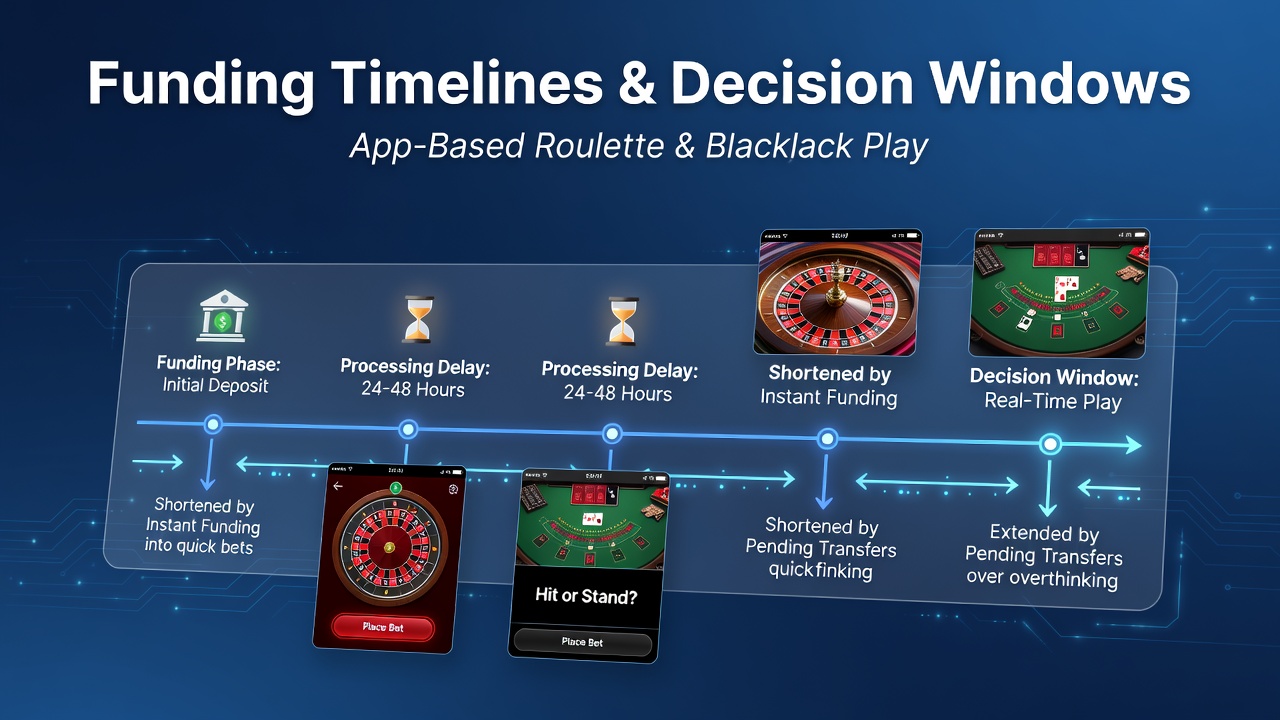
Funding timelines in mobile gaming applications determine when players gain access to real-money balances, which in turn sets the boundaries for when bets can be placed in roulette and blackjack sessions. Observers note that deposit processing speeds, bonus release conditions, and transaction verification steps create distinct windows during which users must decide on wager amounts and table selections before those opportunities shift or expire.
Deposit Processing and Session Entry Points
App-based platforms handle incoming funds through various channels including instant card authorizations, e-wallet transfers, and bank-linked methods that may require additional confirmation periods. Data from the Australian Government Attorney-General's Department indicates that electronic fund transfers in regulated markets often clear within seconds for certain providers while others trigger manual reviews lasting several minutes to hours. Those delays directly influence the moment a player can join an active roulette wheel or blackjack table, narrowing the period available for initial bet placement.
Roulette rounds complete in rapid succession once a player enters the table, so any lag in balance availability forces users to either wait for the next spin cycle or select a different table altogether. Blackjack proceeds through sequential hands where each decision window lasts only until the dealer prompts the next action, meaning late-arriving funds can push participants past optimal entry points in multi-hand sessions.
Bonus Activation Mechanics and Timed Opportunities
Many applications tie promotional credits to specific deposit events, with release schedules that depend on verification steps or minimum play requirements. Researchers at institutions tracking digital gaming patterns have documented cases where bonus funds become usable only after a set number of hours or completed transactions, creating secondary decision layers for players managing both primary balances and restricted credits. In roulette, this structure affects whether users commit to high-volatility outside bets during the active bonus window or conserve resources for later rounds. Blackjack strategies shift similarly when players calculate whether splitting pairs or doubling down fits within the remaining activation period before credits revert or expire.
Regional Regulatory Influences on Transaction Speeds
June 2026 marks the scheduled implementation of updated digital payment verification standards in several jurisdictions, including expanded requirements from the Malta Gaming Authority for cross-border app transactions. These adjustments require additional identity checks that extend processing intervals for certain deposit types, directly lengthening the gap between user initiation and playable balance. Observers tracking North American markets report parallel developments where state-level frameworks in New Jersey and Pennsylvania enforce real-time reporting that can add brief holds on larger transfers. Such policies compress available decision windows in both roulette and blackjack by delaying entry into live dealer environments until compliance steps finish.
Industry reports compiled by the Canadian Gaming Association highlight that players using prepaid vouchers experience faster activation in most cases compared with direct bank feeds, leading some applications to prioritize those methods during peak evening hours when table availability fluctuates rapidly. The result appears in usage logs showing concentrated activity bursts once funds clear rather than steady engagement across longer periods.
Impact on Strategic Choices in Each Game
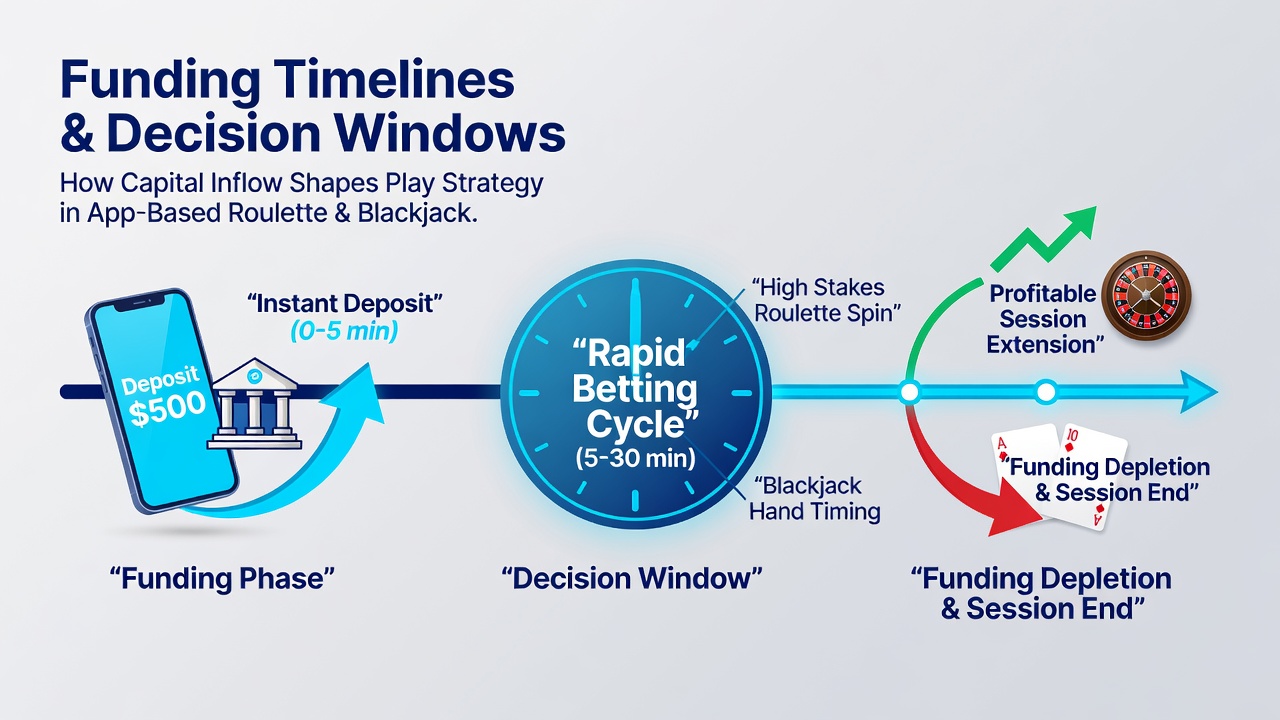
Roulette decision windows hinge on the interval between spins, typically 30 to 45 seconds in app formats, so funding delays that exceed this span force players to recalculate risk exposure on subsequent cycles. Blackjack offers slightly longer per-hand intervals but demands quicker mental arithmetic for insurance or surrender options, making any interruption from pending deposits more disruptive to card-counting approximations or basic strategy adherence. Those who've studied mobile session data note that shorter funding timelines correlate with higher frequency of small, repeated wagers across both titles, whereas extended processing encourages larger single commitments once access finally occurs.
Transaction logs from major app providers reveal that e-wallet users maintain steadier participation rates in ongoing tables because their balances update without extended pauses. Bank transfer users, by contrast, often exit and re-enter tables multiple times within a single evening as successive deposits clear at staggered intervals.
Conclusion
Funding timelines establish concrete parameters around when app users can act within roulette and blackjack environments, shaping everything from table selection to bet sizing through the mechanics of deposit clearance, bonus release, and regulatory verification. Patterns observed across multiple markets demonstrate that faster processing channels expand the number of viable decision points per session while slower methods consolidate activity into narrower bursts once funds arrive. These dynamics continue to evolve alongside payment technology updates and jurisdiction-specific rules scheduled through 2026 and beyond.